- Home
- Best of Southern Italy
- Travel Guide About Trulli Houses and Alberobello
Join A Secret Italy
You come to Italy thinking it will be a trip. You leave knowing it was a beginning
Alberobello: Trulli, Slow Living & Old Puglia
💡 Ditch the roaming fees in Italy. Save 10% on your Saily eSIM with coupon code italymammamia10
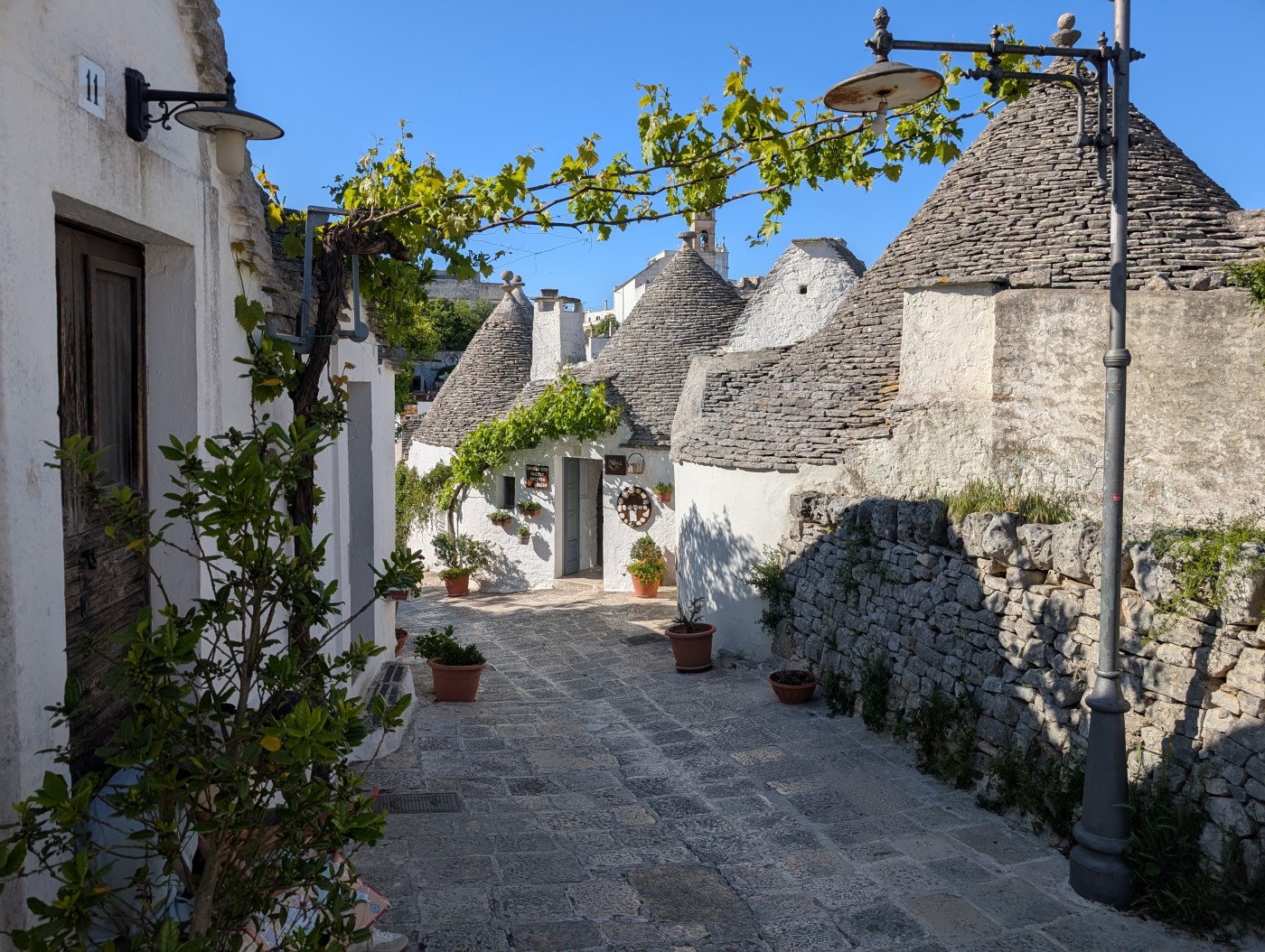
You know that feeling when a place doesn’t just look beautiful but actually moves something inside you? That’s Alberobello for me.
I first arrived on a crisp early spring morning, so early that even the roosters seemed half-asleep. The air smelled of damp stone, wild fennel, and the faintest trace of woodsmoke. An old man in a wool cap was sweeping the lane outside his trullo, slowly, like he had nowhere else to be. Across the way, a woman opened wooden shutters with both hands, letting the day in.
No crowds. No selfie sticks. Just the sound of my own footsteps on white stone.
That was the Alberobello I fell in love with. And that’s the one I want you to meet.
The Poor Old Tale of the Trulli
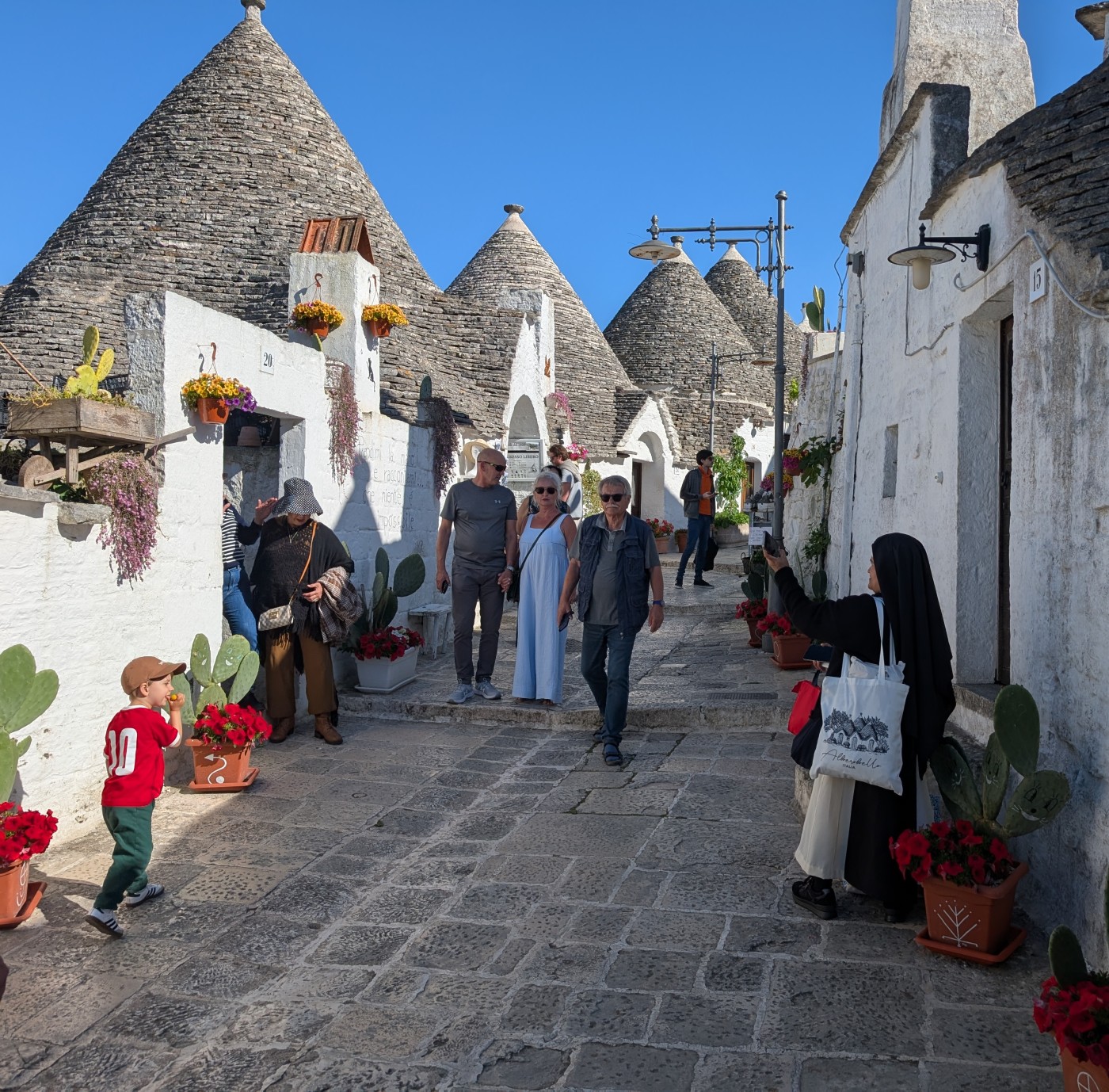
The famous trulli of Alberobello are unlike anything else in Italy. These curious white stone houses with cone-shaped roofs almost look like something children would draw in a fairy tale.
But they were not built for beauty.
Back in the 14th century, local peasants were ordered to construct homes without mortar so they could supposedly be dismantled quickly whenever royal tax inspectors arrived. The local counts wanted to avoid paying taxes on permanent settlements to the Kingdom of Naples. Whether every part of this story is completely true or not, locals still proudly repeat it today.
The houses were built using limestone gathered from the surrounding countryside. Inside, life was simple and often hard. Entire families lived in tiny spaces with animals sometimes kept nearby for warmth during winter. The thick stone walls kept the interiors cool during the brutal Puglian summers and surprisingly warm in winter.
Before tourism arrived, Alberobello was poor. Many older locals still remember when children played in the narrow lanes while women sat outside cleaning vegetables or making orecchiette pasta by hand. Laundry hung between trulli rooftops, and very few outsiders came here at all.
One elderly local once told me: “We never thought people would travel across the world to see the houses we were once desperate to leave.”
And yet today, these humble homes are protected as a UNESCO World Heritage Site.
Why a Morning Walk Here Will Change You
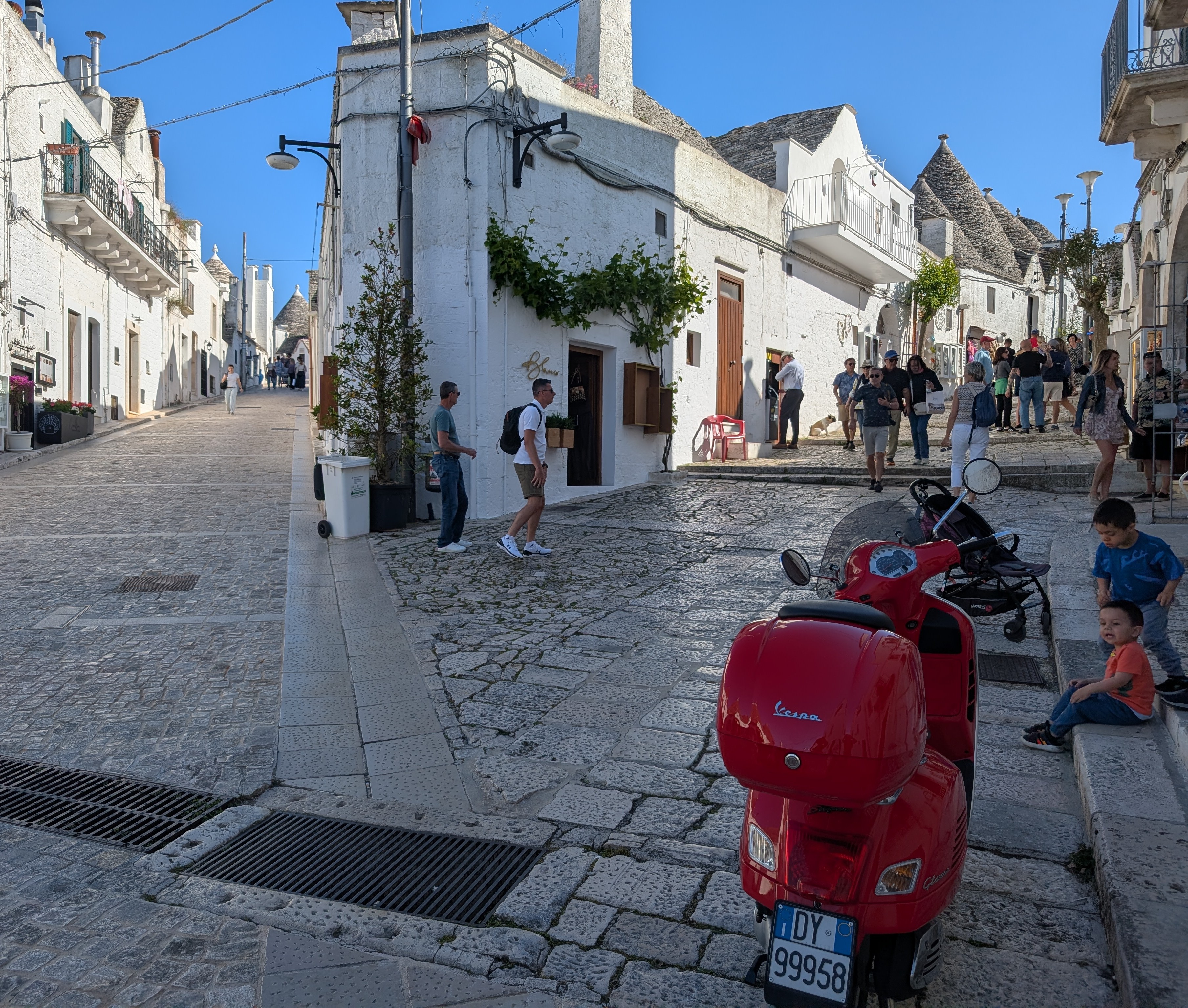
I always tell my readers: don’t just visit Alberobello. Wake up inside it.
Stay overnight — even if it means squeezing your budget. Because between 5 am and 9 am, before the tour buses from Bari roll in, the town belongs to the people who actually live here.
You’ll see a grandfather carrying fresh bread wrapped in paper. A cat stretching on a warm stone step. Steam rising from a hidden bakery on Via Brigata Regina.
And the light — oh, the light. It turns the whitewashed trulli soft pink and gold, and every symbol painted on those roofs seems to glow. Pagan crosses. Hearts pierced with arrows. Mystical signs to ward off the evil eye. Your local guide will tell you what each one means—and trust me, it’s worth every euro.
It is also the most romantic time of day, exploring with your one true love. Heck, it is nearly as romantic as my all-time romantic favorite, Lake Orta. Once the crowds turn up, the romance dials down a notch or two. Until sunset, that is.
Alberobello Tours
Why You Really Should Tour Alberobello with a Local
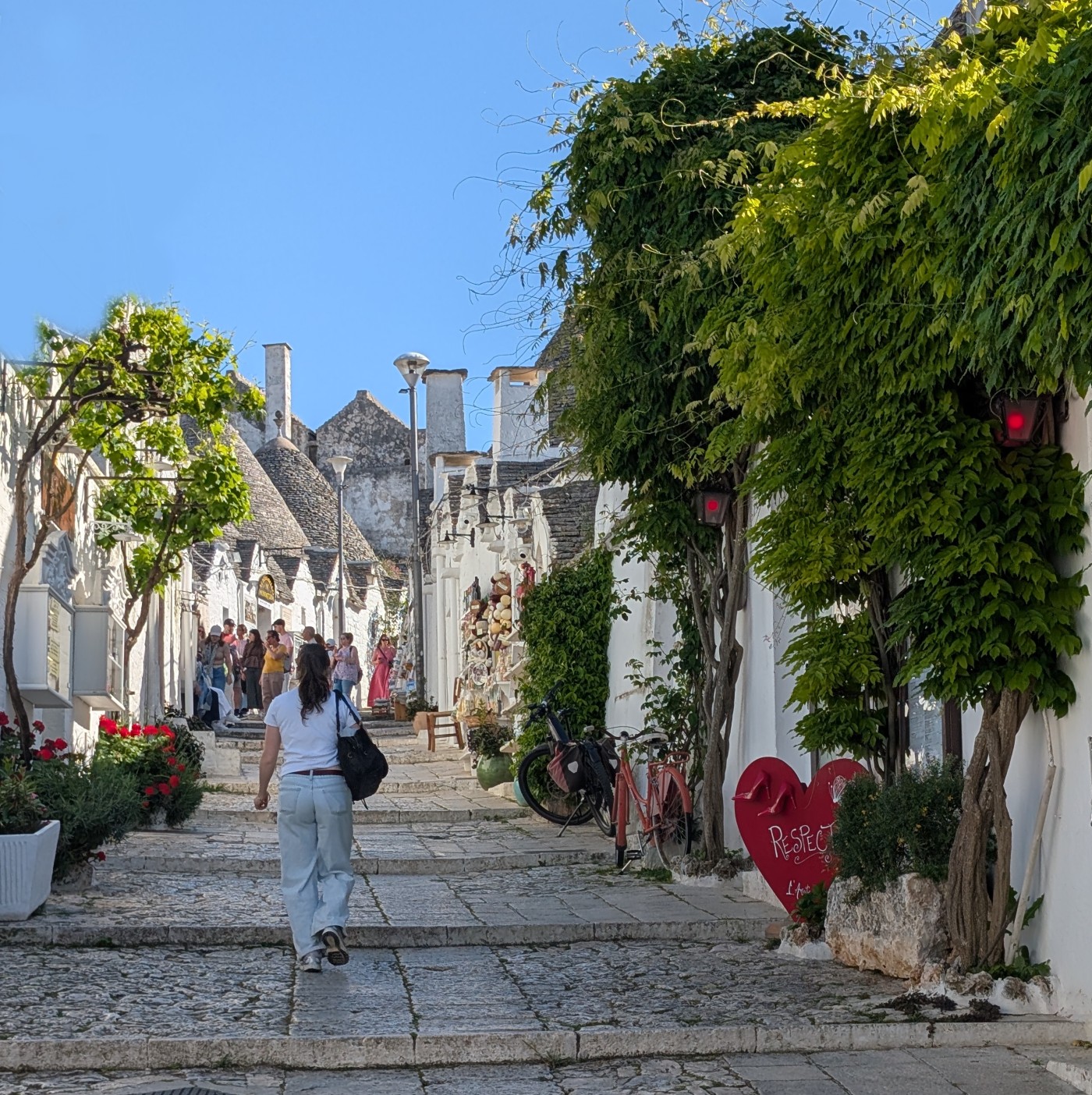
You can absolutely wander Alberobello alone, and you should. But I strongly recommend doing at least one tour with a local guide.
The stories of this place need to be told by someone who grew up here.
A good local guide will explain the strange symbols painted on the roofs — the hidden meanings behind them, how families once lived inside these tiny spaces, and why life here was once incredibly difficult. They will also take you away from the busiest lanes into quieter corners tourists often miss entirely.
Without those stories, Alberobello can feel like a pretty backdrop.
With them, it becomes unforgettable.
What You Absolutely Cannot Miss
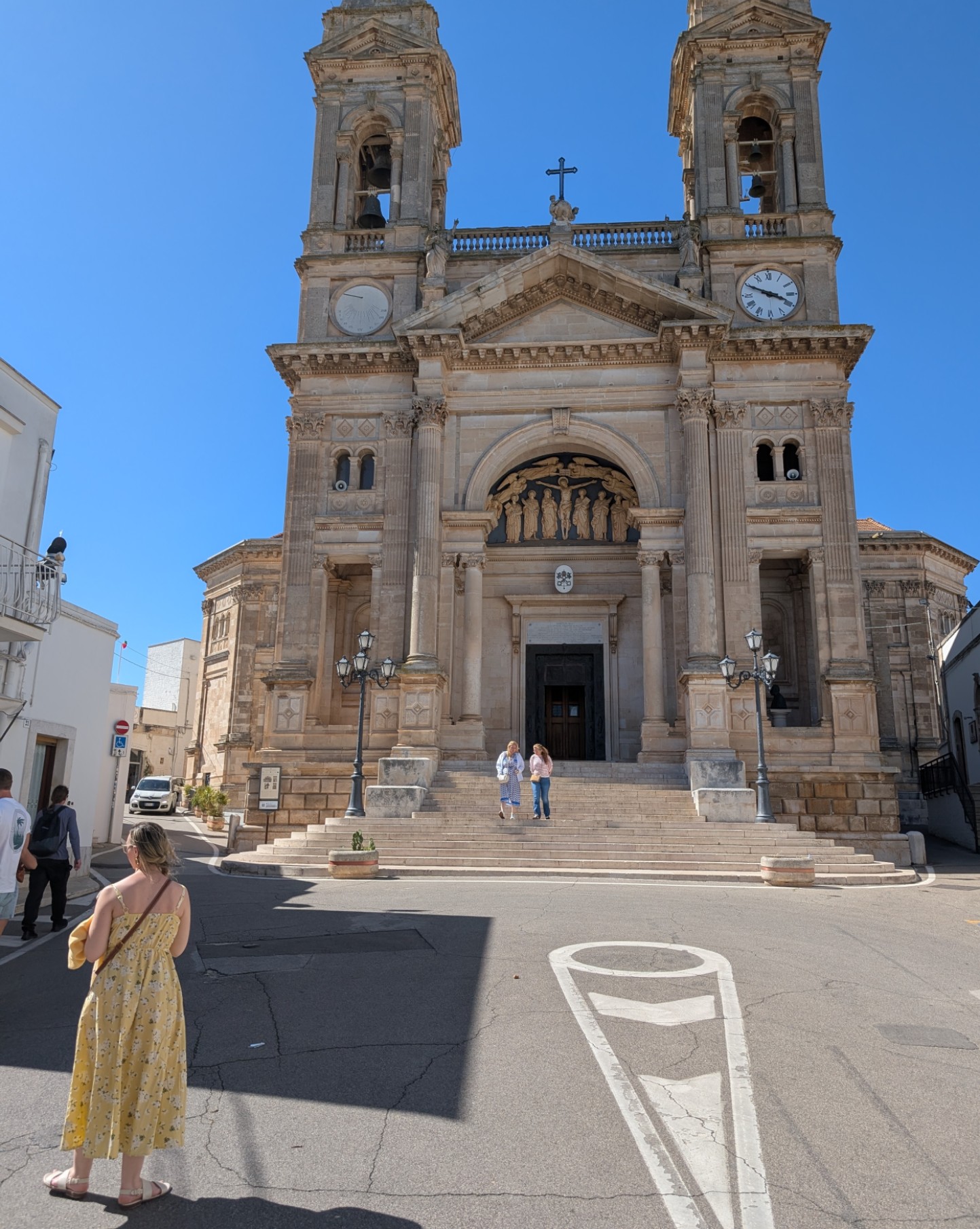
Basilica dei Santi Cosma e Damiano,
When you walk through Alberobello, your eyes are filled with those little trulli, and then suddenly you turn a corner, and there she is, the Basilica dei Santi Cosma e Damiano, rising above the white stone rooftops like a guardian of the town.
She feels different from everything around her. The trulli are charming and magical, but the basilica is grand, elegant, and filled with centuries of stories.
Every September, Alberobello comes alive for the Festa dei Santi Medici, when thousands of people arrive to honor Saints Cosmas and Damian, the patron saints of the town and protectors of those seeking healing. The celebration is not just a local tradition; it is one of the most important religious pilgrimages in Puglia, with visitors traveling from far away to pay their respects.
Inside the basilica, you find a sense of peace that feels worlds away from the busy streets outside. The church houses the relics of Saints Cosmas and Damian, and generations of faithful have come here to pray, give thanks, and ask for protection.
The trulli may be what brings people to Alberobello, but the basilica is where you begin to understand the soul of the town.
Church of Sant’Antonio
Yes, even God gets a trullo here. It’s strange, wonderful, and unexpectedly moving.
Trullo Sovrano
The only two‑story trullo in town. It feels like a dollhouse built for giants. Step inside and see how entire families once lived, cooked, and slept in spaces smaller than most mini-apartments today... and this is one of the biggest of all the trulli houses.
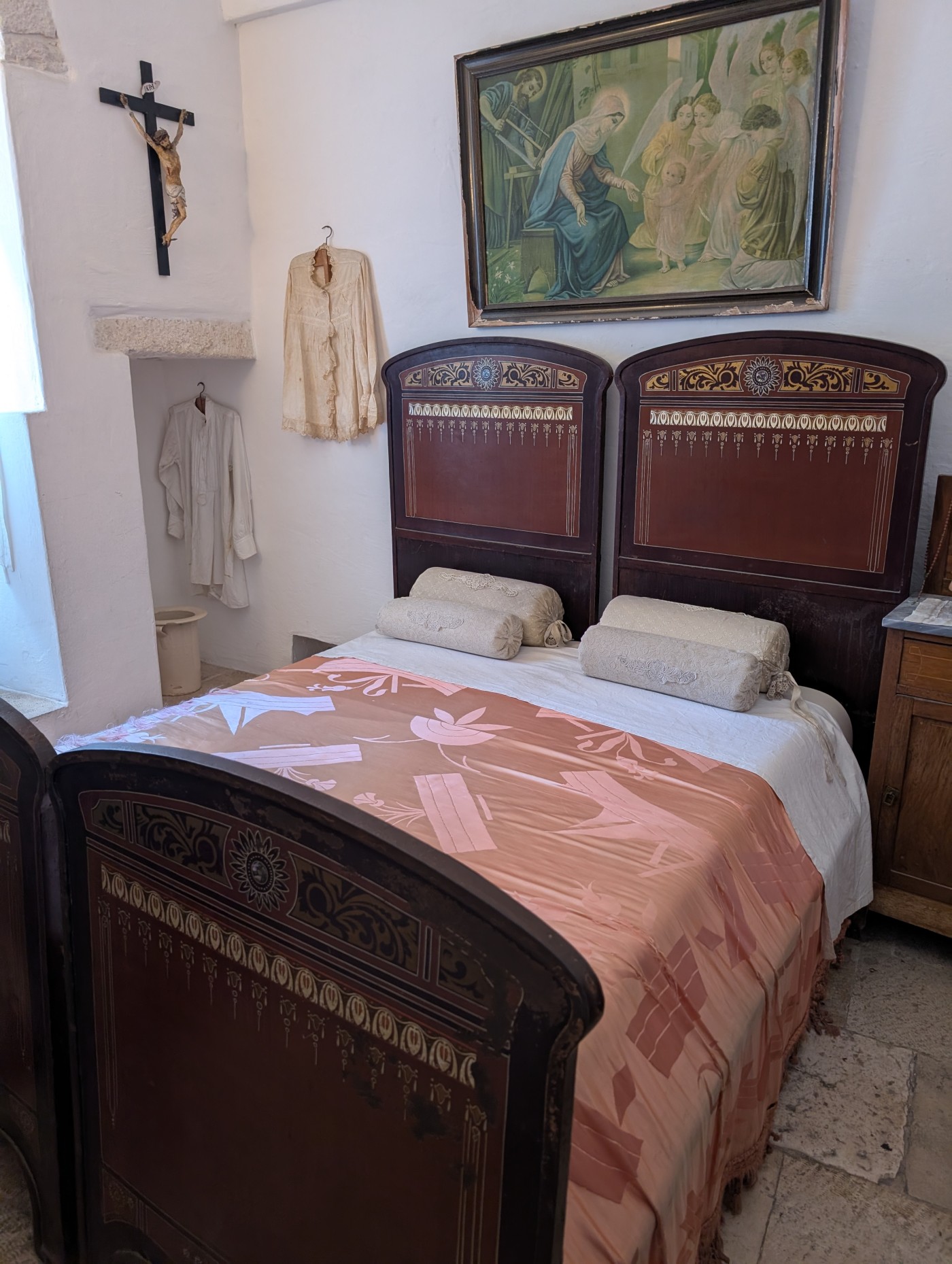 Inside Trullo Sovrano
Belvedere Viewpoint
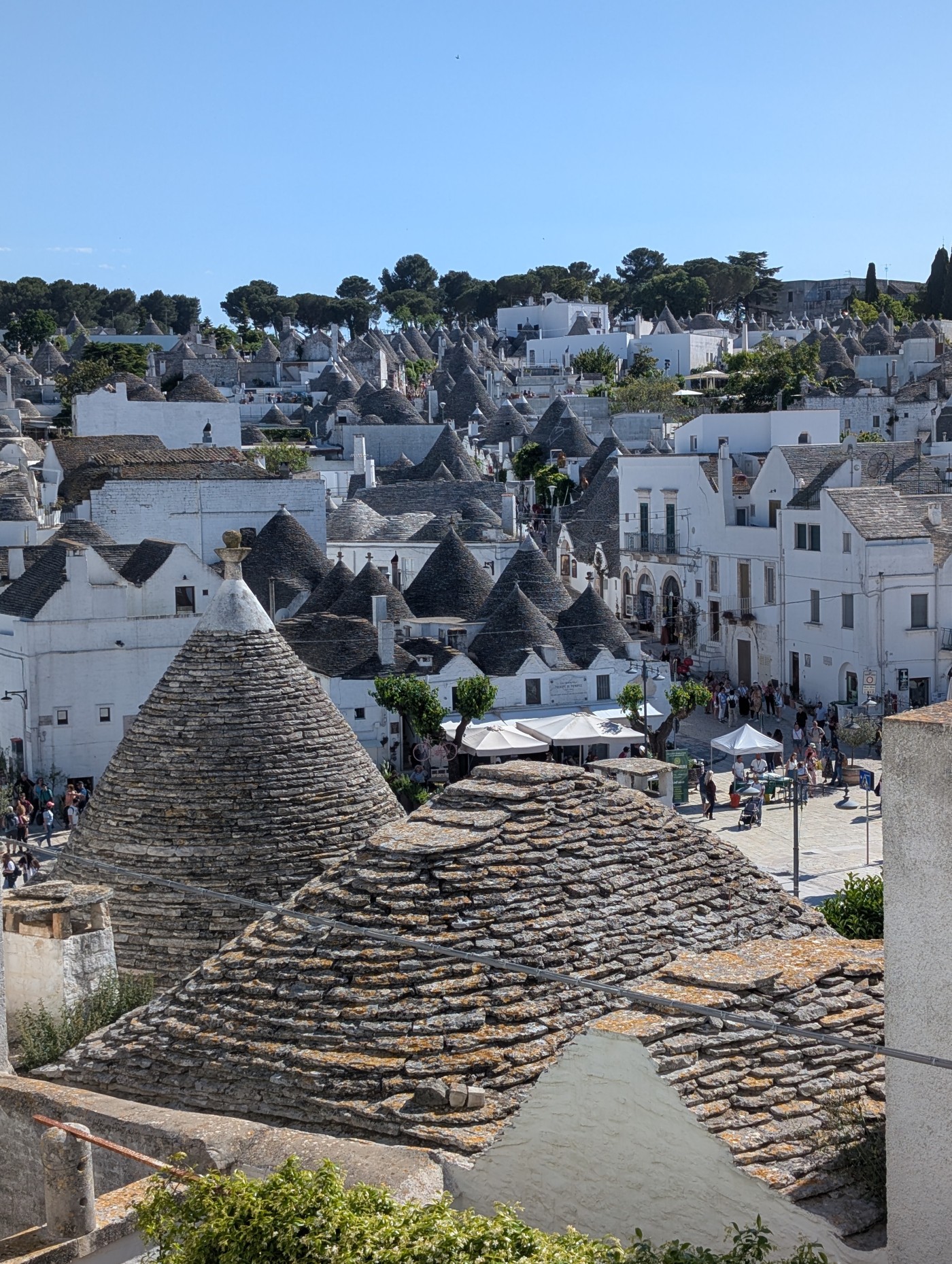
Sunset is lovely. But sunrise? Madonna mia — the rooftops look like a sea of stone waves. Bring a coffee and just stand there.
Rione Monti
This is the famous postcard area with over 1,000 trulli spread across a hillside. Yes, it gets busy during the day, but it is still magical.
Come very early in the morning if you want photos without crowds.
Aia Piccola
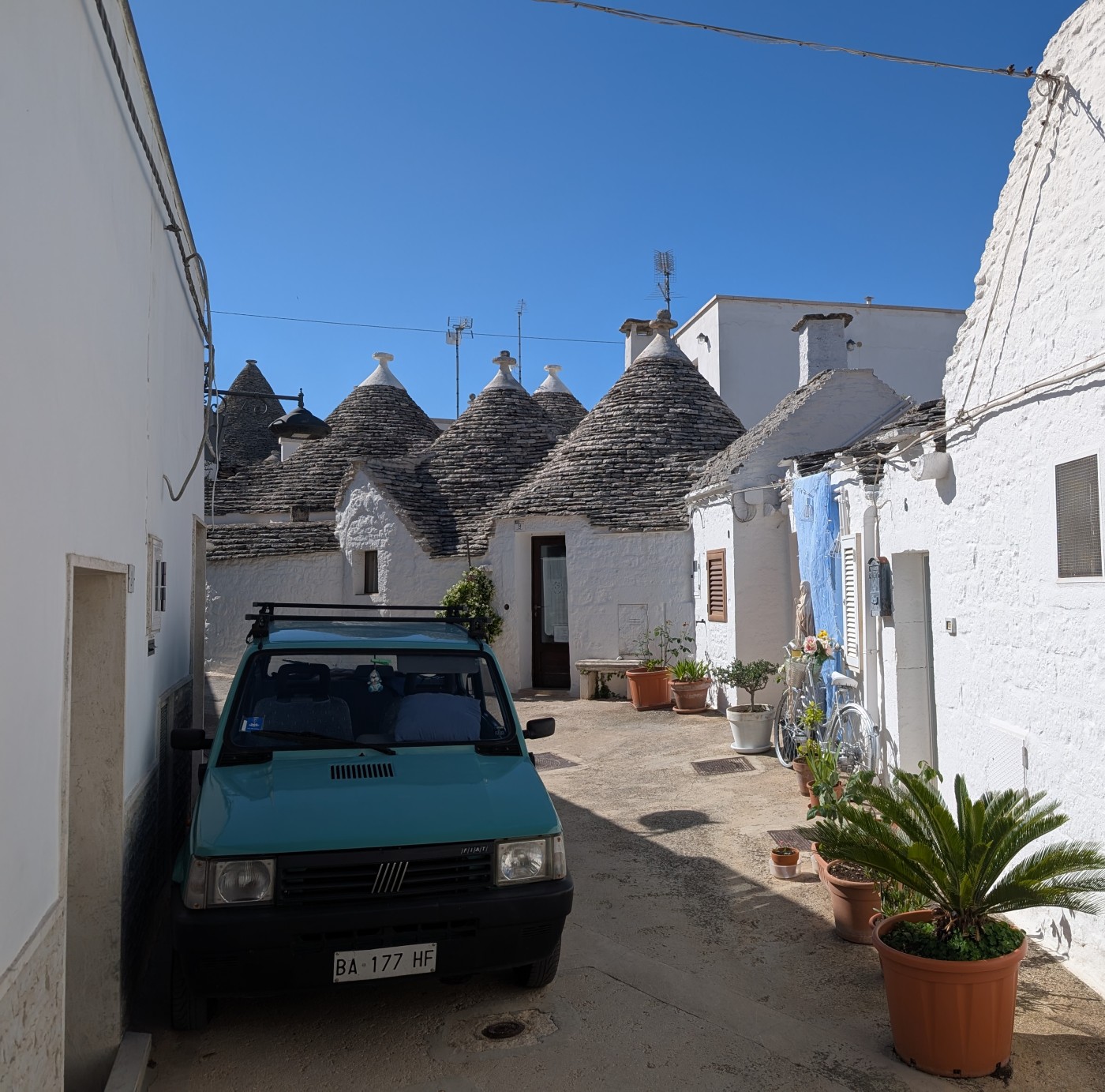
Rione Monti is postcard-perfect, and you should see it. But Aia Piccola is where my heart lives. Fewer tourists, more laundry hanging between trulli, and the sound of old men arguing lovingly over cards.
Eat Like a Local
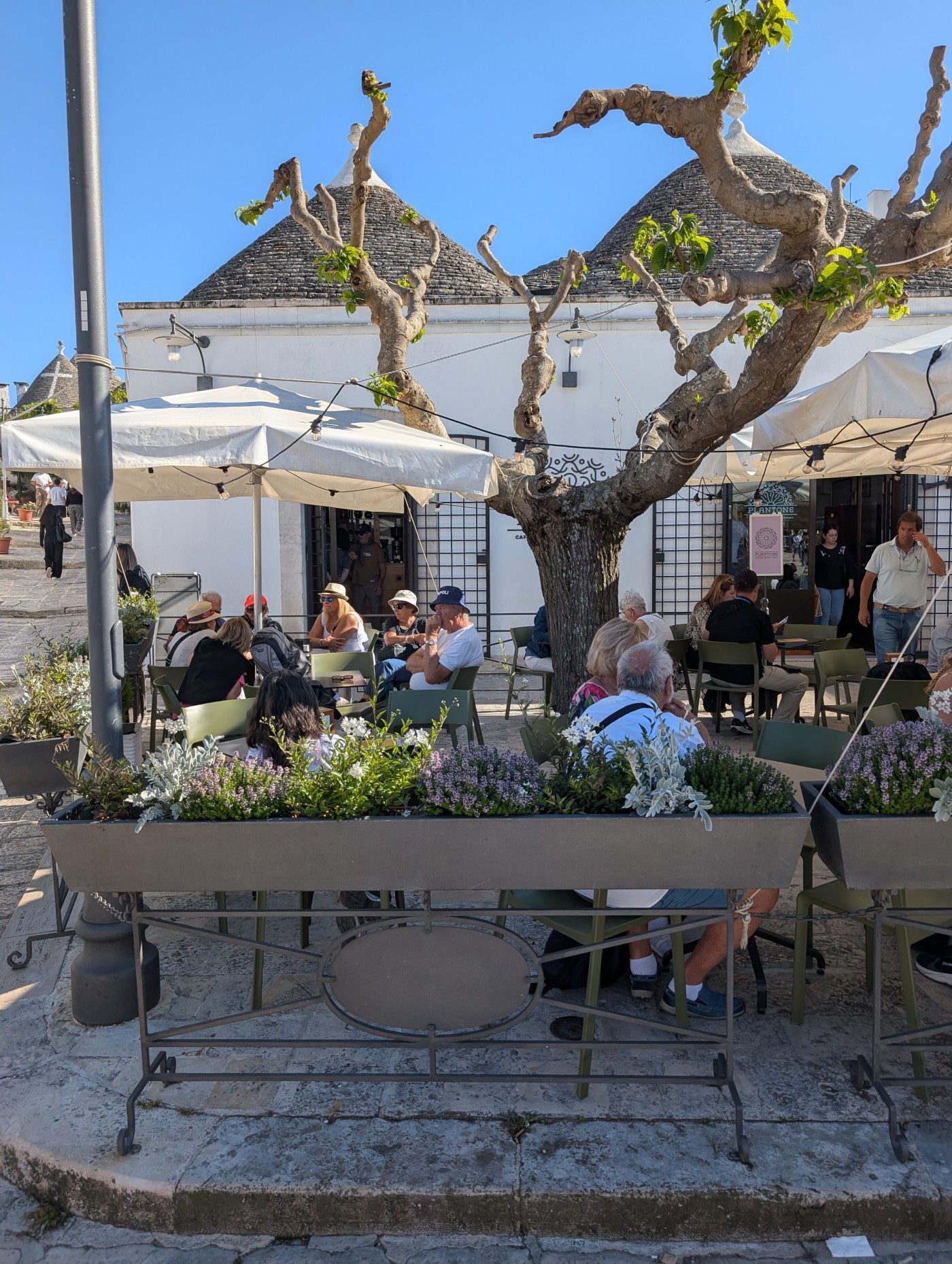
Puglian food doesn’t show off. It doesn't need to.
Get your hands on:
- Orecchiette pasta—the famous little ears
- Burrata cheese—creamy and decadent
- Focaccia Barese—soft, olive-oil-rich heaven
- Bombette—small meat rolls, often grilled to perfection
- Local olive oil—from ancient groves
- Taralli biscuits—crunchy, savory, addictive
One thing many tourists miss is the small family-run food shops away from the busiest streets.
Walk a little outside the main tourist lanes and look for bakeries selling fresh focaccia and warm bread early in the morning. Some of the best food in Alberobello is found in simple neighborhood shops rather than souvenir-filled tourist areas.
And please, please buy olive oil from a small shop away from the main drag. The groves around Alberobello are ancient... some trees are over a thousand years old. That oil tastes like the land itself.
Wonderful Places to Eat
For traditional local cooking, try:
- Trattoria Terra Madre — excellent regional dishes and local ingredients
- L'Aratro—cozy and authentic with wonderful homemade pasta
Where to Sleep Like a Local
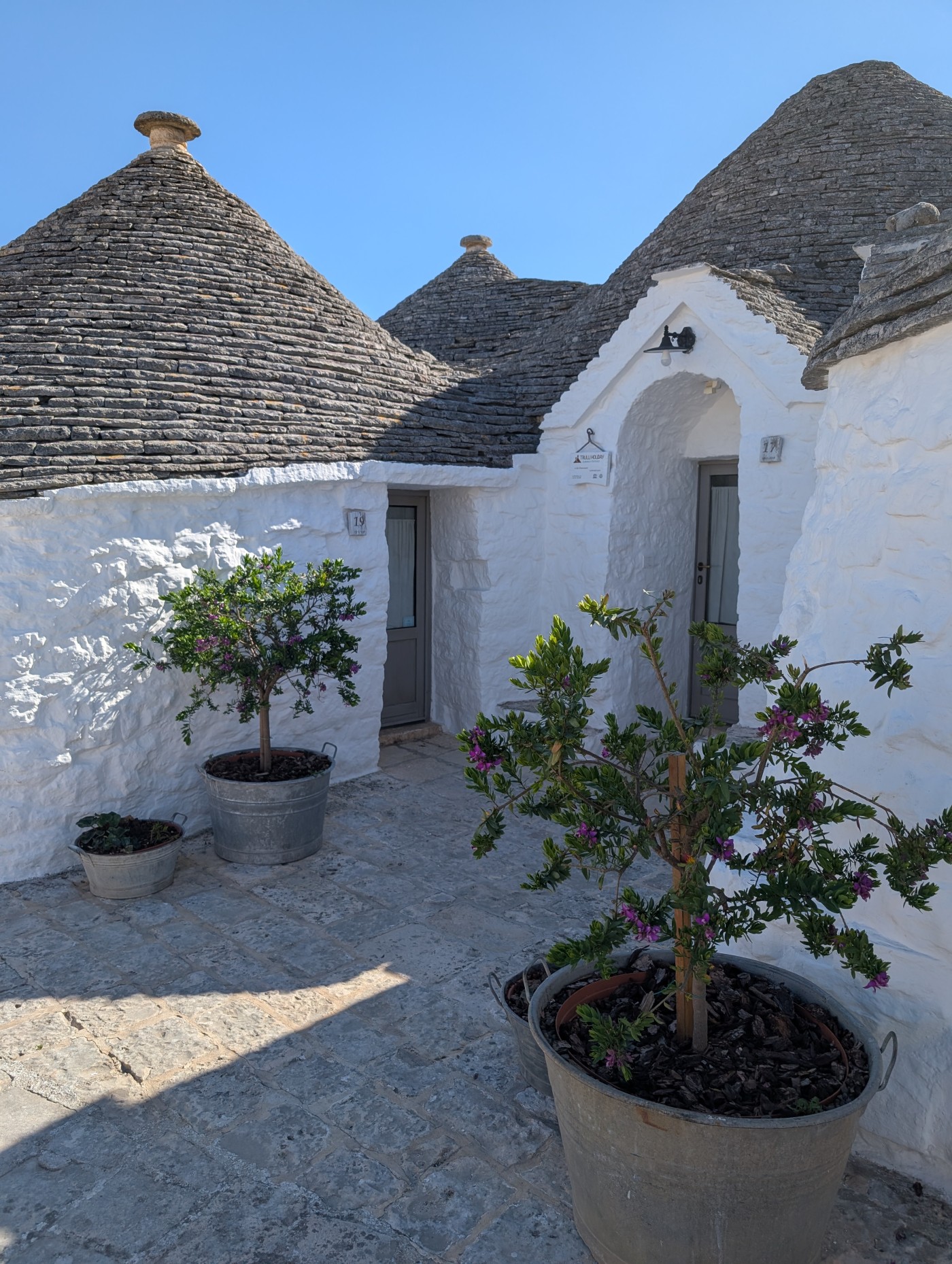
For excellent value, I love recommending Trulli Holiday Albergo Diffuso. Here you actually sleep inside one of the trulli scattered throughout the old town rather than in a standard hotel room pretending to have “local charm.” Some are simple and rustic, others more elegant, but all give you that magical feeling of waking up inside the history of Alberobello itself. Early in the morning, when you step outside and the streets are still silent except for church bells and the smell of coffee drifting through the lanes, you suddenly understand why people fall in love with this place. It is the kind of experience you will talk about for years afterward.
If you want something truly special and do not mind splurging a little, then consider Le Alcove Luxury Hotel nei Trulli. This is one of Alberobello’s finest luxury stays, with beautifully restored trulli suites that combine ancient stone architecture with modern comfort. Some rooms feature private jacuzzis, vaulted stone ceilings, and terraces overlooking the rooftops of the old town. Staying somewhere like this completely changes your experience of Alberobello because once the crowds leave in the evening, you are still there, wandering lantern-lit lanes with almost nobody around. If you can afford it, I highly recommend spending at least one night in a luxury trullo. Few experiences in Italy feel quite so magical.
Nearby Hikes & Countryside Walks
The countryside around Alberobello is beautiful, especially during spring and autumn. Dry stone walls crisscross the landscape while ancient olive trees twist across red earth.
Selva di Fasano
The hills around Selva di Fasano offer lovely walking routes and cooler temperatures during summer.
Cycling Through the Valle d’Itria
The entire Valle d'Itria region is ideal for slow exploration by bicycle or car. Small roads wind through vineyards, olive groves, and tiny white villages. Rent a bike and let the road lead you — you won’t regret it.
What to See Nearby
Alberobello is perfectly positioned for exploring some of Puglia’s most beautiful towns.
Locorotondo may actually be my favorite village in this area. It is elegant, peaceful, and far less crowded. Perfect for a lazy lunch.
Martina Franca Baroque churches, grand piazzas, and excellent food make Martina Franca well worth visiting.
The famous White City of Ostuni shines brilliantly under the southern sun. It’s a short drive away and absolutely stunning.
Although technically in Basilicata (neighboring region), Matera combines perfectly with Alberobello. Both places feel ancient and unlike anywhere else in Italy.
My Personal Tips (What Most Tourists Never Learn)
- Walk at 6:30am. Seriously. The light, the silence, the birds—it's a prayer.
- Don’t buy souvenirs in Rione Monti. Walk ten minutes into the new town and find the same things for half the price.
- Learn two words of Italian. Buongiorno and grazie open doors (and hearts) here.
- Talk to an old person. Many remember when Alberobello was poor and unknown. Their stories are worth more than any guidebook.
When to Go & How to Get There
Best months: April, May, September, October; warm but not brutal.
Avoid August unless you love sweating in a sea of people.
By car (my recommendation): Rent one. Puglia is made for slow driving.
By train: Ferrovie del Sud Est from Bari. VERY Slow, charming, and very Italian.
By tour: Fine for a taste, but you won’t feel Alberobello this way.

FAQ About Alberobello
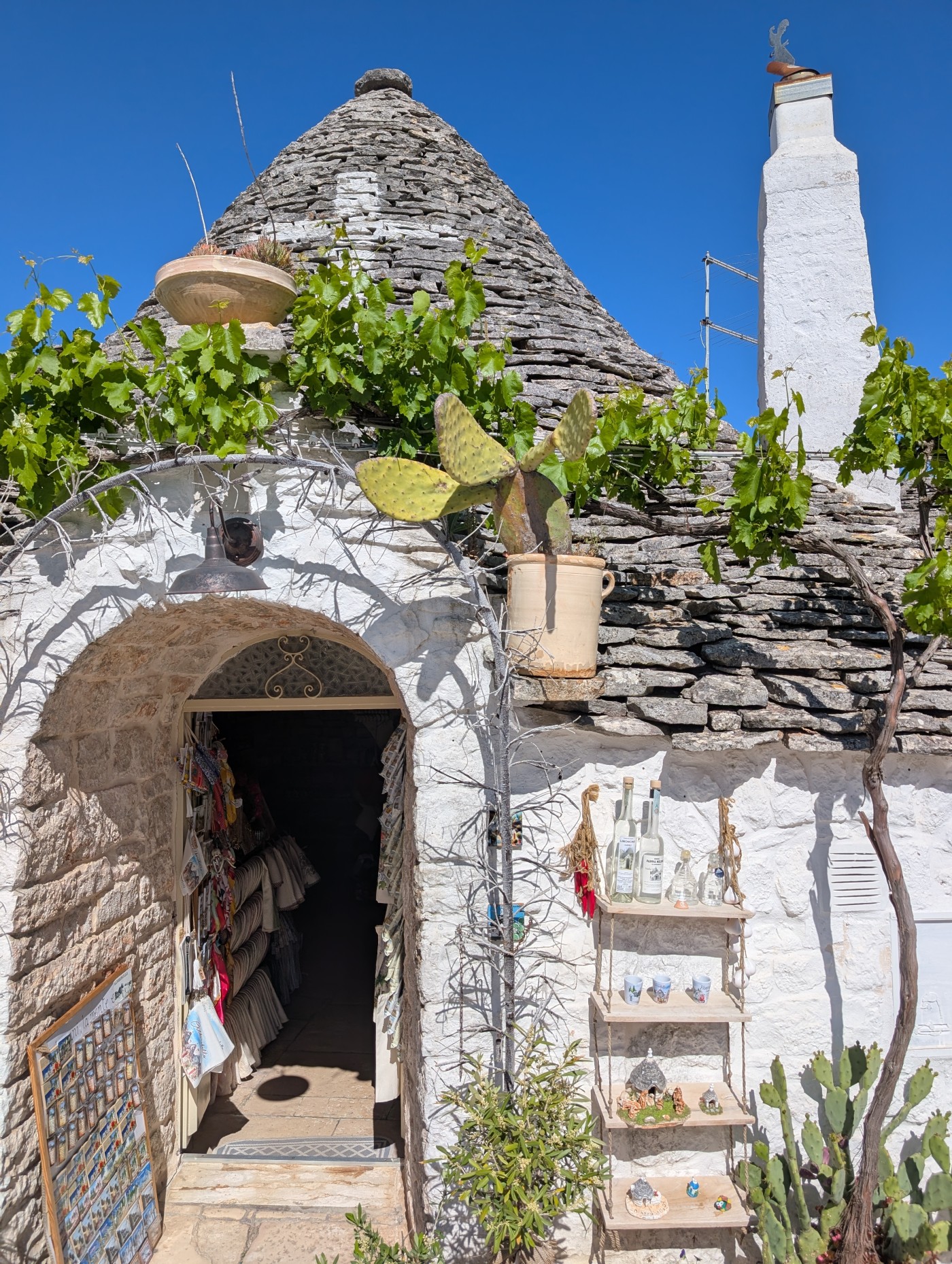 Souvenir store in Alberobello
Is Alberobello worth visiting?
Is Alberobello worth visiting?
Absolutely. It is one of the most unique towns in Italy and unlike anywhere else in the world.
How many days do you need?
How many days do you need?
One night is ideal. Two nights is even better.
Can you sleep inside a trullo?
Can you sleep inside a trullo?
Yes, and I highly recommend it. Many trulli have been converted into charming guesthouses. Book early — they fill up fast.
Is Alberobello very touristy?
Is Alberobello very touristy?
During the middle of the day, yes. But early mornings and evenings are magical and much quieter.
What do the symbols on Alberobello's trulli roofs mean?
What do the symbols on Alberobello's trulli roofs mean?
Many trulli have white-painted symbols on their cone-shaped roofs. These are usually a mix of Christian, pagan, astrological, and mystical signs that were believed to bring protection, good fortune, or blessings to the family living inside. Most were painted by local master builders and remain one of Alberobello's most fascinating traditions.
Is Alberobello good for shopping?
Is Alberobello good for shopping?
Yes. Alberobello is one of the best places in Puglia to buy unique souvenirs. The trulli are filled with small family-run shops selling handcrafted ceramics, olive wood products, local olive oil, wines, linens, jewelry, and traditional Puglian foods. While some tourist shops can be expensive, you'll also find authentic artisan workshops if you wander beyond the busiest streets.
Final Thought
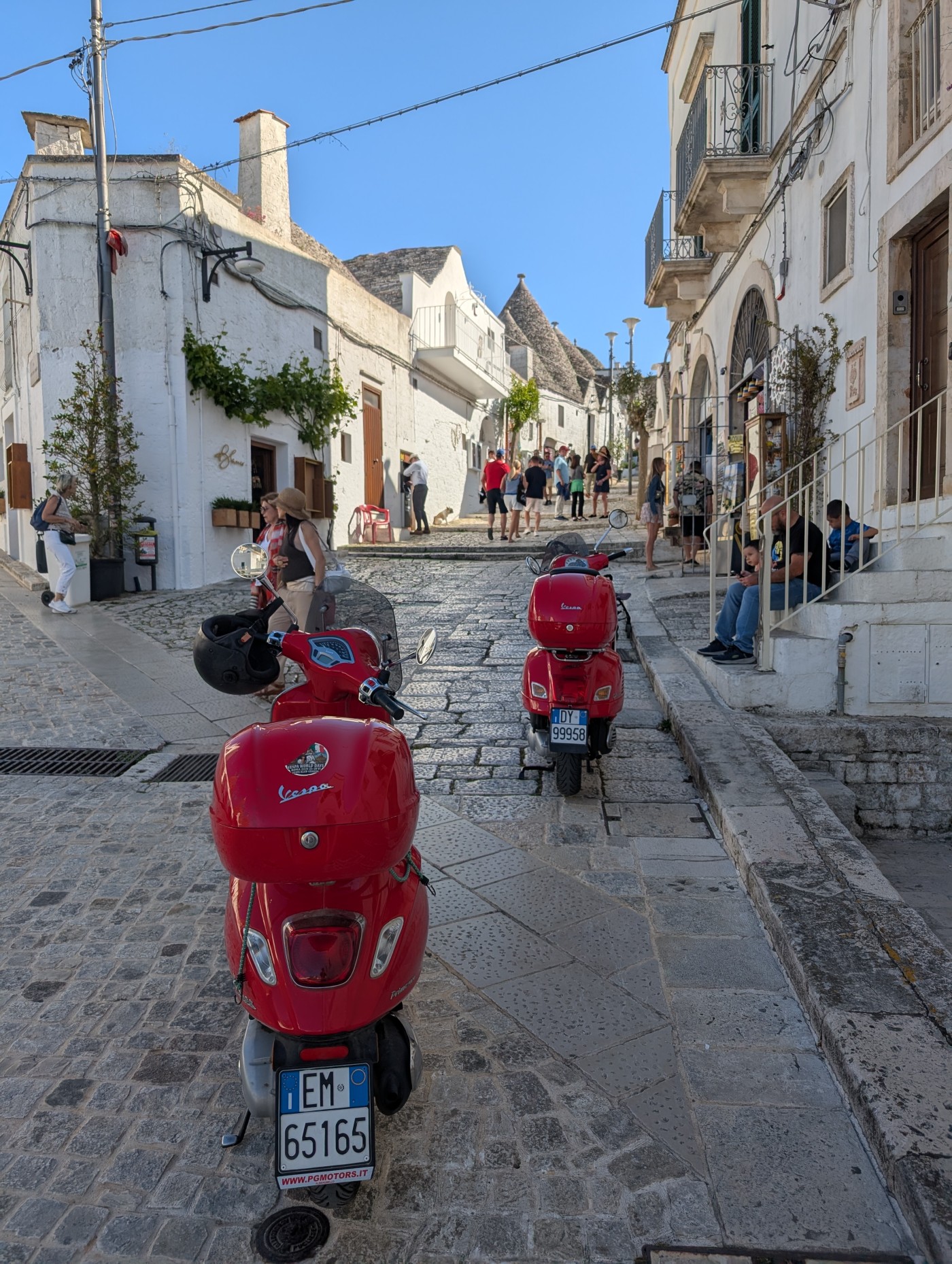
Alberobello is easy to photograph. That’s not the point.
The point is standing alone in a narrow lane at dawn, looking up at a stone cone that’s stood for five hundred years, and realizing people survived here. People loved here. People dreamed of leaving, and now we dream of arriving.
That’s the real Alberobello. Slow. Honest. Unforgettable.
Please Book With Us... Maria here; if you enjoy my site, I'd love your support. Simply book your next trip anywhere (not only to Italy) via the link below or with any of the hotel links on the website.
You'll get the best deal available and the income I receive helps me to remain independent and to keep bringing you more of beautiful Italy.
You'll Enjoy These...
What to See in Sicily: Unmissable Sights, Towns & Experiences
Not sure what to see in Sicily? Start with these unmissable sights, villages, towns, landscapes, and experiences that perfectly capture Sicily’s magic.
Unleashing Italy's Fiery Fury: Volcano Risk in Italy
Discover the volcano risk in Italy and get the facts you need to know before you travel there. We answer your questions and reveal the implications for tourists
A Story about War Memorials in Calabria and Italy
In every town here in Calabria that I have seen, there is a Monumento ai Caduti. A monument to the fallen, to their young men who gave their lives in wars
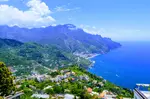
The Definitive List of Where to Stay on the Amalfi Coast
The fragrance of jasmine & lemons in the air, colorful cottages tumble down to azure seas. You will love it here. This is where to stay on the Amalfi Coast.
Why You Should Visit Bari Before Everyone Else Does
Bari is where the heart and soul of Puglia is to be found. Bari is real, Bari is vibrant and Bari is enchanting. Watch out for flying wooden spoons though...
Teggiano - The Undiscovered Hilltop Town in The Cilento
An ancient medieval village in the heart of the Cilento, Teggiano is tucked away in the Cilento Natural Park. Discover all there is to see in charming Teggiano.
8 Authentic Calabrian Dishes Every Food Lover Should Try
Calabrian food is fantastic and we've 8 dishes from Calabria you absolutely must try - from Calabrian Nduja to Tartufo, these Calabrian treats are delicious.
The Best Amalfi Coast Beaches—Beyond the Tourist Spots
Dreaming of that perfect Amalfi Coast beach? We’ve found the top ones near Amalfi and Positano—and they’re even more beautiful than you think.
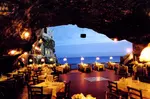
Polignano, Matera and the Hotel in a Cave
Polignano has to be one of Italy's best kept secrets. What an amazing little town. Then there is Matera where things get a little strange..
Paestum Italy: Your Guide to The Best-Preserved Greek Temples in Italy
Once a mighty city part of the powerful Greek empire, Paestum and it's archeological park is now a UNESCO World Heritage Site you definitely will want to visit.
Calabria Uncovered: Where to Go, What to See, and Why It’s Worth It
Many don’t know where Calabria is in Italy, a region of charming coastal towns and authentic beauty. Not only find out—go visit. This is Italy at its best.
The Best Southern Italian Destinations
South of Rome we go on a journey discovering the very best Southern Italian destinations. You may know of some of them but others you have never heard of.
Top Tips for Visiting Civita di Bagnoregio – Italy’s Hidden Treasure
Want to visit Civita di Bagnoregio? This guide shares must-know tips, hidden spots, and advice on how to best enjoy Italy’s most enchanting hilltop town.
This is Why I Love Positano on the Amalfi Coast and You Will Too
Positano on the Amalfi Coast is one of the finest, prettiest places on earth. Its picturesque landscapes remain with you long after you return home
Gorgeous Photos of Positano, Amalfi, Tuscany and Venice
Many of our Facebook fans share their photos with us. These galleries are dedicated to the best of them. Photos of Positano, the Amalfi Coast, Venice and more.
Where is the Best Beach in Italy?
A beach as beautiful as anything you'll find in the Caribbean or on the Greek Islands. So, where is this beautiful beach that we rate the best beach in Italy
The Sila National Park and San Giovanni in Fiore
Wild forests, where bandits once hid, endless vistas, great eagles and wolves. One of Europe's last wild places. To miss seeing Sila would be a huge mistake.
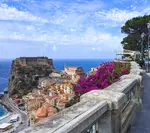
Enchantment Awaits: Scilla and the Fishing Village of Chianalea
Scilla is a dream destination and at the heart of the town lies the true pearl, the fishing village of Chianalea; one of the most beautiful towns in Italy
You'll never Forget the Amalfi Coast!
You may travel across the seven seas and visit continents near and far yet of all the world's beautiful places the Amalfi Coast is the one you'll never forget.
Why Visit Pizzo in Calabria?
Other towns offer wine, olive oil or chocolate. In gorgeous Pizzo, they do gelato tastings—not just any gelato, but the world-famous Tartufo of Pizzo.
Matera - Ancient and Full of Life
Once the shame of Italy and now one of her crown jewels. Matera is the original Italy, ancient beyond all other towns, another world.
Tropea: The Loveliest Small Town in Italy
It’s not every day a town is named the most beautiful in all of Italy—but Tropea earned that title. Trust me, one visit and you’ll know it was well deserved.
Cilento Pictures, Holiday Guide and Travel Tips
These Cilento pictures capture a region that offers everything you could possibly wish for including majestic mountains, azure seas, ancient fishing towns,medieval villages and stunning beaches
The Perfect Cilento Holiday
Planning a Cilento Holiday? The Zizzania should be first on your list,.. coming here is like taking a journey back to when life was lived at a slower pace.
Calabria's Secret Towns: Morano Calabro Travel Guide
Thinking of visiting Morano Calabro in Calabria? Out travel guide has all the info you need and explains why travel to Morano Calabro is such a great idea.

More Travel Tips:
- Grab a Saily eSim and save 10% with coupon code italymammamia10.
- Avoid the Lines. Book your tickets to museums and other attractions in advance on Tiqets.com
- Book your accommodation. Booking.com and Agoda help you to book accommodation in advance
- Book your excursions. Wherever you go, make the most of your time! Choose the best option for yourself on Viator or Getyourguide
- Book your car. At least a month before is best. Use Discover Car Hire.
- Get peace of mind when traveling. Get insured with VisitorsCoverage.com
- Home
- Best of Southern Italy
- Travel Guide About Trulli Houses and Alberobello